10 Ways African Countries Are Leading the World in Generosity
Here are 10 concrete ways African countries lead global giving.

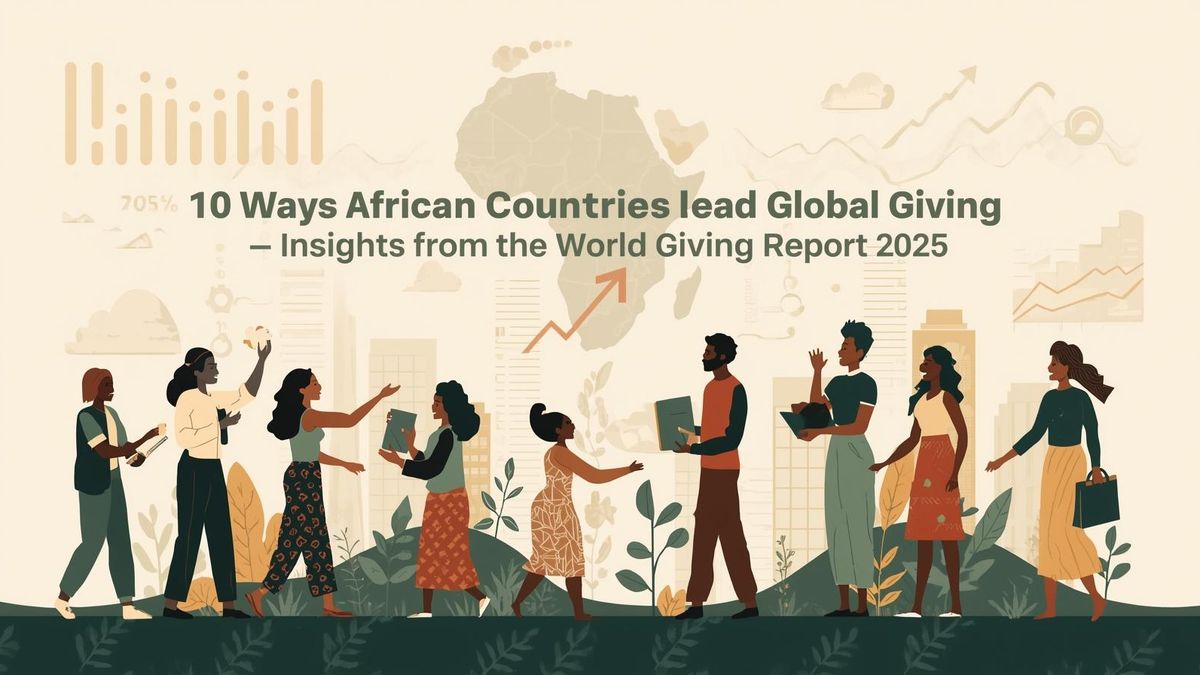
The World Giving Report 2025 shows that African generosity is distinct and powerful. From the share of income given to time volunteered, local focus, and trust in charities, African countries are setting important examples.
Here are 10 concrete ways African countries lead global giving.
1. Africans Give A Larger Share of Their Personal Income
People in many African countries give a higher share of their income than their counterparts in richer countries. On average, people in Africa donated 1.54% of their income to good causes.
For more context, according to the World Giving Report 2025, Nigerians recorded giving an average of 2.83% of their income. Egypt, Ghana, and Kenya also recorded donations above 2 percent, placing them among the top 5 most generous countries in the world.
By contrast, people in high-income countries, especially Europe, gave only 0.7% on average. Japan, Germany, Finland, Portugal, and France all gave less than 0.5% on average, making them the least generous countries in the world.
In terms of the proportion of income donated, African countries account for six of the top 10 most generous countries in the world and 17 of the top 30 countries. Only two countries (Sudan and Mozambique) are in the bottom half of the table.
This measure helps explain the true scale of African generosity when expressed as a share of income rather than absolute dollars.
2. Africans Give More Time Through Volunteering
Volunteering is another area where generosity in Africa stands out. Globally, around 26 percent of people volunteered in 2024, averaging nine hours per person. In Africa, however, the average volunteering time was 14 hours 30 minutes per person, and 39 percent of people volunteered with religious organizations, which was the most frequent place for volunteering. Overall, 8.2 billion hours were spent volunteering across the African continent.
This contrasts sharply with Europe, the world’s least generous continent in terms of time, where the average was just 6 hours and 30 minutes per person, amounting to a total of only 4.0 billion hours, less than half of Africa’s total.
3. Giving Stays Local More Than Anywhere Else
In Africa, 87 percent of charity donors gave to local organizations. That is the highest rate of local giving across regions, showcasing African philanthropy in action. Donors here favor grassroots groups and community initiatives.
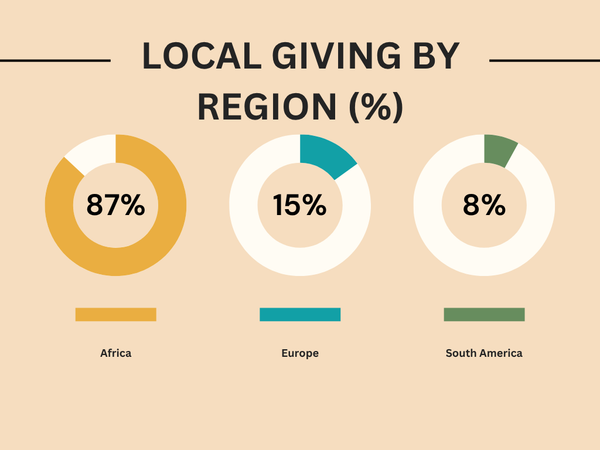
According to the Africa Collaborative, less than 5 percent of global humanitarian assistance reaches locally rooted organizations.
This makes Africa’s generosity in giving to local organizations even more remarkable, highlighting the continent’s strong commitment to empowering homegrown initiatives and ensuring that support directly benefits the communities most in need.
4. African Donors Support Many Causes at Once
According to the CAF World Giving Report, Nigerian donors supported the widest range of causes in 2024, averaging 4.3 different causes. This is higher than any other region, surpassing even Asia’s 3.3, truly cementing Nigeria’s lead as the most generous country in the world.
The spread shows how Nigerian and African givers respond flexibly to diverse local needs.
In contrast, Europeans donated to the fewest causes, averaging just 2.5.
5. Lower Income Does not Mean Lower Generosity
The World Giving Report finds that low-income countries often give a larger share of income. For example, Uganda gave 2.04 percent, Malawi 1.80 percent, and Tanzania 1.69 percent.
The average for low-income countries was 1.45 percent, compared with 0.7 percent in high-income countries.
The most generous high-income countries in the report are Qatar (1.92%), the UAE (1.92%), and Saudi Arabia (1.13%). All other high-income nations, mostly in Europe, donated less than 1 percent of their income.
These figures highlight the strength of African generosity, showing that giving is deeply rooted in values of solidarity and community rather than wealth.
6. Faith Fuels Generosity in Africa
Religious giving plays a major role in driving generosity across Africa. Forty percent of Africans donated to religious organizations, the highest share of any continent, compared to just 16 percent in Europe.
In Angola, the largest proportion of donations went to religious causes, while in Nigeria, the most generous country in the world, 33% percent of donors gave through faith-based giving.
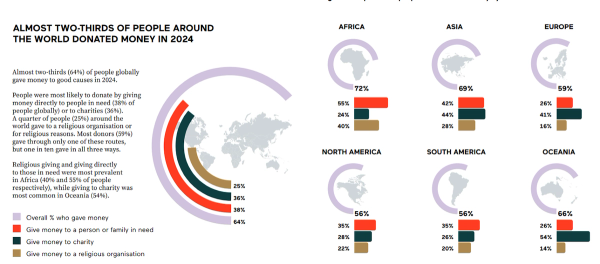
This shows how deeply religion shapes charitable behavior and motivates people to support those in need across African communities.
7. Duty and Care Motivate African Giving
When asked why they donate, 65 percent globally said they give because they care about the cause.
In Africa, a greater share of donors view giving as a duty. Around 38 percent of African donors said donating is a duty, compared with roughly 14 percent in North America.
The sense of duty is even more apparent when viewed alongside financial constraints. Nearly half of non-donors in Africa (47 percent) said they could not afford to give, meaning many could have donated if they had the means.
In contrast, only about a quarter of non-donors in North America (27 percent) gave this as their reason.
8. Africans Are More Likely to Support Environmental Causes
Donors in Africa and Asia were the most likely to give to environmental causes in 2024.
Notably, Nigeria and Egypt ranked among the top five countries most likely to support environmental causes, both at 20 percent, following Vietnam, China, and India.
According to the same report, donors who supported education and environmental causes also gave the most as a percentage of their income, averaging 2.3 percent overall.
This growing interest connects climate resilience to local development priorities and reflects a broader pattern of African generosity, where giving extends beyond immediate needs to long-term sustainability and community well-being.
9. Informal Help and Neighborliness are Common in Africa
Helping neighbors and acquaintances is widespread. The report records that 87 percent of people helped neighbours or acquaintances in 2024.
Countries like Senegal reported rates as high as 98% while 97% of donors in Sudan helped a stranger they did not know.
In contrast, Japan recorded the lowest rates for both helping neighbours and strangers, highlighting the strong sense of community and mutual support that defines African giving.
10. Several African Countries Rank Among the Most Generous Countries in the World
Multiple African countries appear in the global top 20 for share of income donated.
Nigeria tops the list of the most generous countries in Africa (and the world), followed by Egypt, Ghana, Kenya, Uganda, Malawi, Tanzania, Sierra Leone, Cote d'Ivoire, Zambia and Rwanda.
These rankings counter the stereotype that generosity flows only from wealthy countries.
Conclusion
The World Giving Report 2025 shows that African generosity continues to grow across money, time, and local impact, in many cases surpassing regions like Europe.
This steady rise reflects a deepening culture of solidarity, community-driven support, and homegrown philanthropy across the continent.
It is therefore imperative for donors, governments, and intermediaries to invest and make efforts to increase African giving.
Philanthropy Circuit remains at the heart of this mission, sharing data, insight, and storytelling that highlight Africa’s leadership in shaping a more inclusive and community-centered philanthropic future.
About the Author
Abdullahi is a multidisciplinary communications professional with experience in editing, content strategy, translation, and digital storytelling. As an Associate Editor at Philanthropy Circuit, he contributes to research, editorial development, and thought pieces that explore trends in African philanthropy, development, and social innovation. Before joining Philanthropy Circuit, Abdullahi served as Managing Editor at Northpad Nigeria, leading an editorial team and developing SEO-driven content strategies that expanded audience engagement. He also worked as an SEO Content Writer at Ozmites Tech, supporting the launch of MamiMarkets.com, and as a Communications Officer at the Centre for Girls Education (CGE), where he developed digital campaigns advocating for girls’ education.